

Free Fallin’
On modern anxieties, the paradox of free will, and Paradise Lost

The only way to deal with an unfree world is to become so absolutely free that your very existence is an act of rebellion.
— Albert Camus
“Just stop thinking about it. It’s all in your head.” As if these racing thoughts have a switch I can turn off. As though I welcome these panic attacks that keep me up past midnight. Anxiety is a strange kind of hell because it’s not a physical place; it imprisons one within their own mind. No matter how many times I try to escape, I find myself back in the same pandemonium.
My grandmother tells me not to worry because “it’s in God’s hands.” She says this to comfort me — a way to relinquish my fears to something greater than myself. But anxiety doesn’t listen to reason, it persists long after any form of reassurance. The feeling is like walking in a pitch-black room, guiding yourself along the wall. Anxiety follows one through moments of joy and peace, and of sadness and despair. Unfortunately, mental health conditions have become prevalent in a society that continuously values productivity over human well-being. I’m certainly not alone in experiencing an internal prison.
During the 17th century, John Milton expressed something disturbingly similar in his epic poem Paradise Lost. Before the work was published in 1667, Milton was going through his own psychological torment. Blindness took over him by 1652 and he was briefly imprisoned after the collapse of the Puritan Revolution in 1660. Falling into political disgrace, Milton spent his final years channeling his trauma, grief, and life experience into his magnum opus.
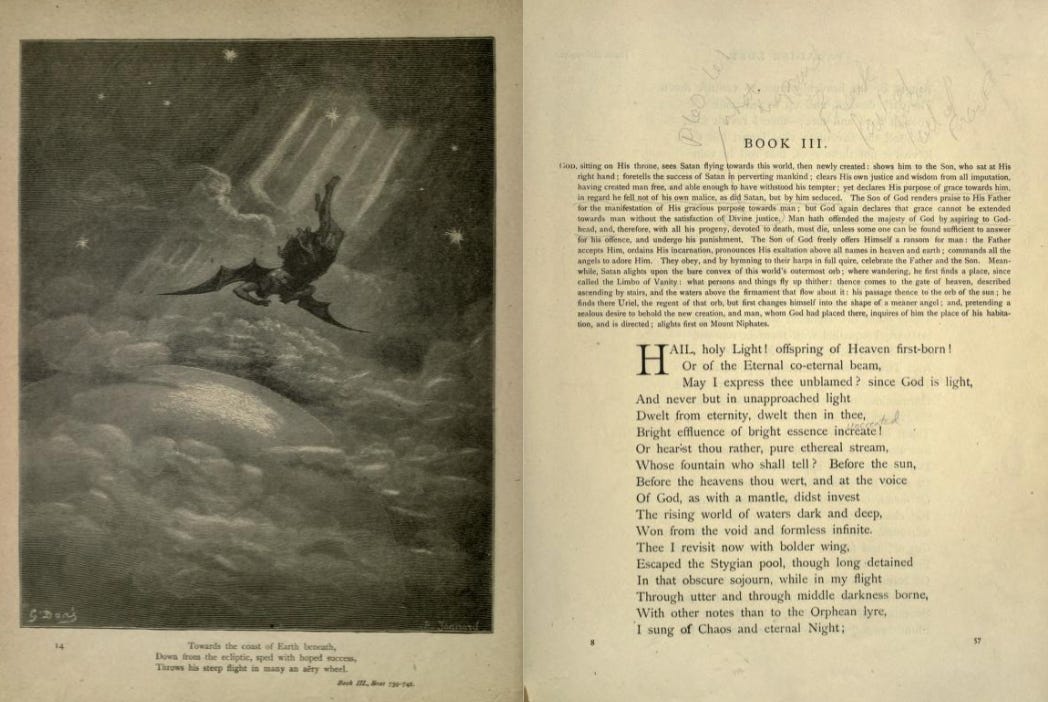
Unable to employ modern concepts of anxiety and mental suffering, Milton used Satan to demonstrate how the mind can distort reality: “The mind is it’s own place, and in it self / Can make a Heav’n of Hell, a Hell of Heav’n” (PL 1.254-255). In the aftermath of Satan’s rebellion and the fall of Adam and Eve, Milton presents Hell as not merely an external state, but rather an internal condition shaped by anxiety, self-awareness, and internalized pressures. In doing so, Paradise Lost reveals the paradox of “free will” within power structures that offer an illusion of choice while dictating the outcome of that freedom — a factor that remains deeply imbedded in capitalist systems seen today.
Whether it is intentional or not, Milton portrays Satan as a tragic hero like Achilles or Aeneas, whose qualities become relatable to the human experience. After his defeat, Satan falls for nine days from Heaven until he lands in the fiery depths of Hell. Void of light, Satan and the rest of the fallen angels wake up disorientated and stunned, acclimating themselves to the darkness of their new environment.
In The Concept of Anxiety: A Simple Psychologically Orienting Deliberation on the Dogmatic Issue of Hereditary Sin, Søren Kierkegaard’s describes anxiety as “the dizziness of freedom.” This quotation mirrors Satan’s psychological state after the fall, as he awakes in Hell confronted with his new reality, separation from God, and an overwhelming awareness of infinite possibilities. His rebellion gives him radical freedom, but freedom becomes confusing and, in some ways, unbearable.
As Satan approaches Paradise, he begins to lament his current state and becomes conflicted about his future. During his soliloquy, Satan says, “Me Miserable! which way shall I flie / Infinite wrauth, and infinite despaire? / Which way I flie is Hell; my self am Hell; / And in the lowest deep a lower deep / Still threatning to devour me opens wide, / To which the Hell I suffer seems a Heav’n” (PL. 4.75-78). In Book 1, Satan boldly claims he can make a “Heaven of Hell,” but here he acknowledges that he has done the exact opposite; therefore, making his internal agony inescapable. In this way, Satan becomes the embodiment of psychological ruin and anxiety.
Many would posit that Milton himself was experiencing similar feelings through his own set of traumas. William Blake comments in The Marriage of Heaven and Hell that “the reason Milton wrote in fetters when he wrote of Angels & God, and at liberty when he wrote of Devils & Hell is because he was a true Poet and of the Devil's party without knowing it.” While Blake’s claim may be an overstatement, he does make a valid point about the tension between Milton and his version of Satan. There are too many resemblances that are difficult to ignore. Was Milton alluding to his own anxieties through Satan? Much like Satan, Milton also rebels against a hierarchical system and exists in a state of perpetual darkness.
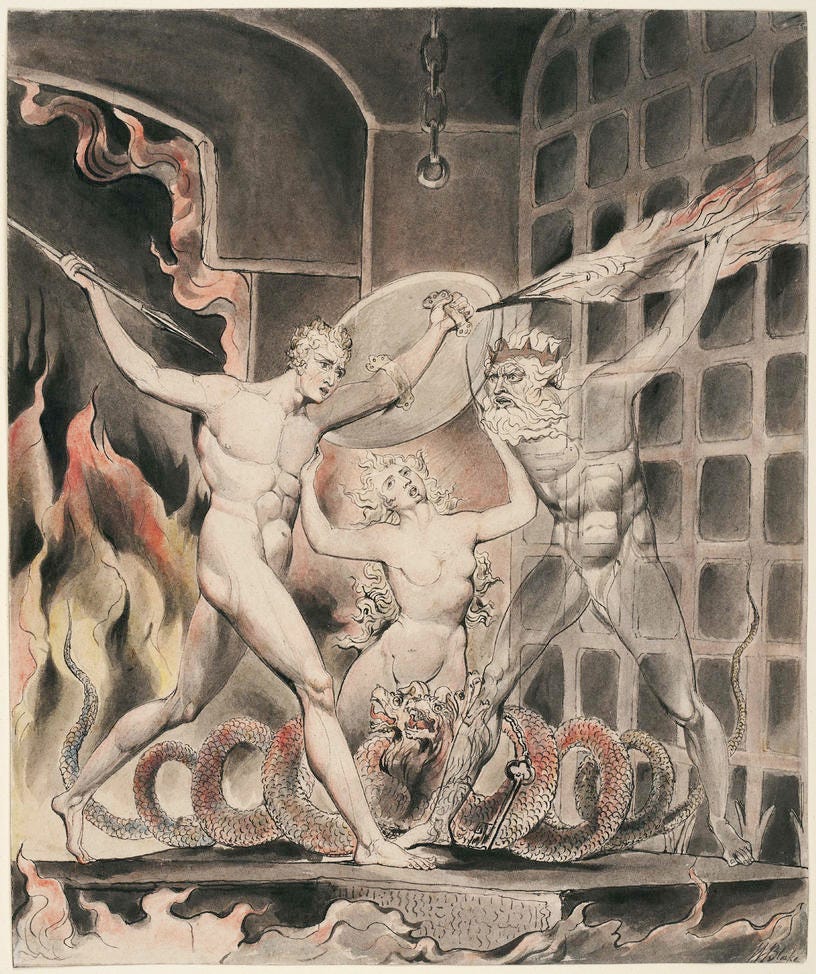
Satan’s torment, then, doesn’t grow in pure isolation. His anxiety is born within institutional frameworks of obedience, punishment, and divine authority. In Book 3, in reference to the creation of angels and humans, “Freely they stood who stood, and fell who fell” (PL 3.103). But despite God’s creations possessing free will, Milton inadvertently poses the question: how free can choice truly be in a system where the consequences are already predetermined? This tension creates a paradox that extends beyond Satan.
Adam and Eve also receive the promise of freedom, but it exists alongside the same power structures that shape the outcome of their choices. After eating the forbidden fruit, and expelling themselves out of Eden, they each become prisoners of their own minds. The innocence that kept their minds in a state of everlasting peace was nevermore. Upon disobeying God, Adam and Eve feel shame, vulnerability, and self-awareness. In this way, self-awareness itself becomes ridden with worriedness. Following their remorse, Eve suggests ending their lives to Adam to end their suffering in a Romeo and Juliet-esque fashion. Milton depicts suicidal thinking as a potential way out of dealing with internal guilt, shame, and hopelessness, which are all emotions directly rooted in anxiety.
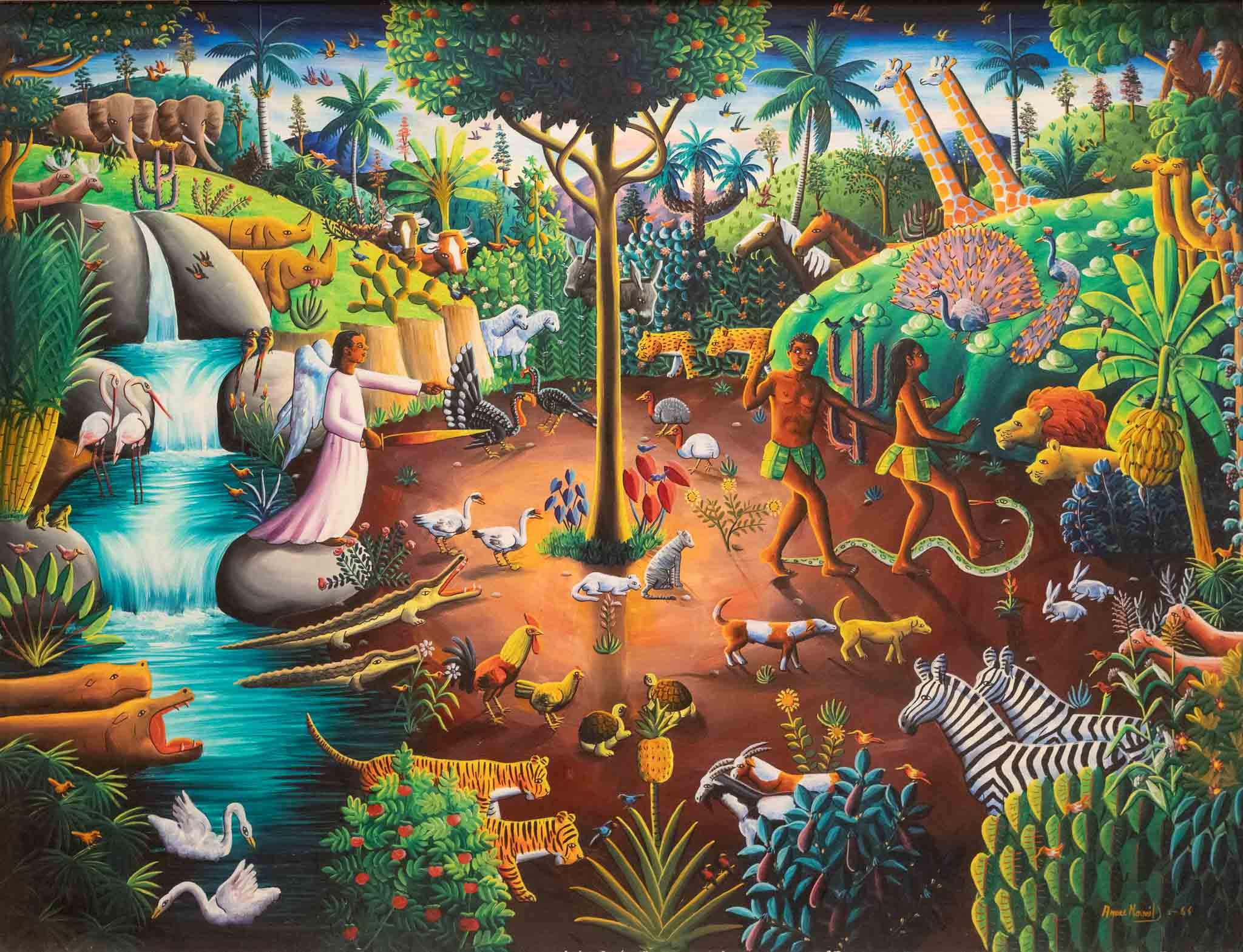
Perhaps, there is something to say about humans carrying this existential weight of anxiety for centuries. What are the forces that internalize these pressures? The characters in Paradise Lost seem to have free will, but their decisions are shaped by divine hierarchy and rigid power structures that demand obedience unless they face punishment.
While looking at the current human condition in the United States, individuals are sold under the illusion of freedom, while at the same time being punished for dissenting against the ruling class. Within this framework, it becomes clearer how Satan — the highest form of evil — becomes relatable to working-class people who are tired of living under a system that doesn’t afford equality. One might argue there’s a little bit of Satan in all of us.
As John F. Kennedy stated, “Those who make peaceful revolution impossible will make violent revolution inevitable.” When people’s anxieties, uncertainties, and rage expand over time, eventually it grows into an uprising against the system producing these injustices. Society has adopted the phrase of “earn a living,” which means if one doesn’t work, then, they are unable to afford the basic necessities such as food, water, shelter, and healthcare. Freedom, in this context, becomes a form of resistance.
While people appear to be in a free society, their quality of life is dictated by capital. The relentless demands of a consumerist society create a “hustle culture,” where people are under constant pressure to optimize their performance or else face the consequences.
According to the National Institute of Mental Health, “an estimated 19.1% of U.S. adults had any anxiety disorder within the past year and an estimated 31.1% of adults experience anxiety at some point in their lives.” Moreover, those in low-income households are at a greater risk of developing anxiety because of material hardships and financial instability. We are told we are free, yet our worth becomes tied to output and success.
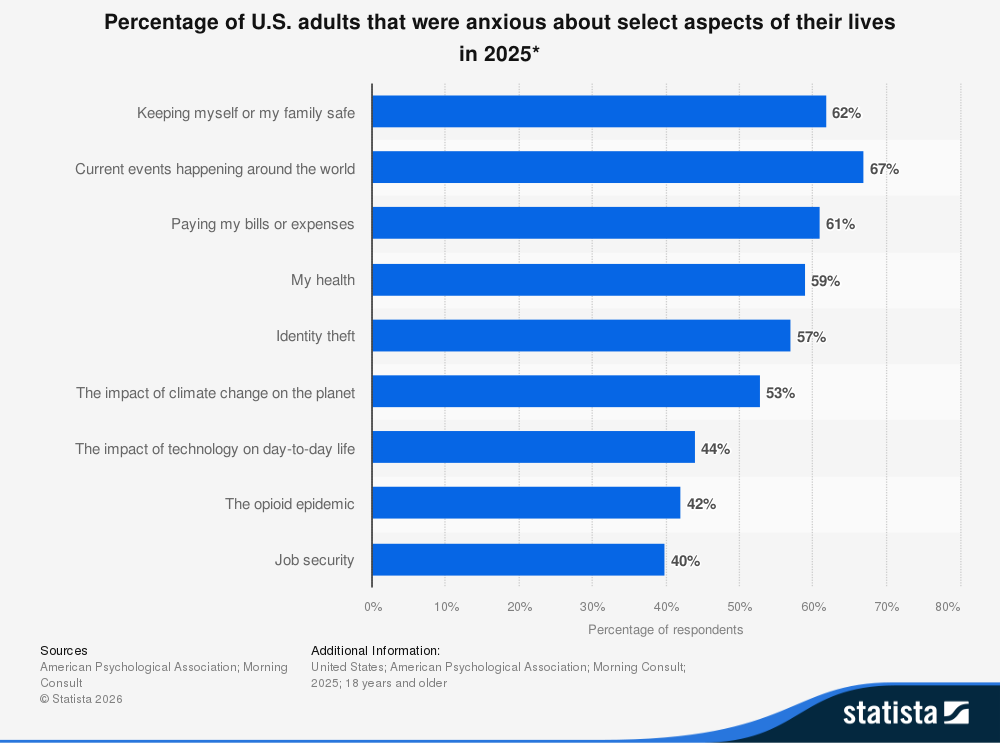
Anxiety becomes internalized. Rest starts to feel like guilt, self-worth becomes linked to efficiency, and “failure” feels personal. But having anxiety and feeling burnt out is not just a personal issue, it’s an appropriate response to living under late-stage capitalism. So, like Satan, Adam, and Eve, people in the contemporary world often experience freedom less as peace than as psychological free fall, a “lower deep still threatening to devour” them.
It is possible that true freedom comes from the fall itself. In this way, anxiety becomes a survival method. I think back to my grandmother and her advice about God. But I also remember something else. I recall her saying, “anxiety is your superpower.” Maybe she was right.
While anxiety can feel like self-imprisonment, it can also be a tool for liberation, applying knowledge to a tangible structural problem. Being aware of one’s mental and physical condition is how one realizes something is wrong or unjust, which is the first step in creating a radical change towards something better.
In Book 12, the archangel Michael, says to Adam, “leave this Paradise, but shalt possess / A paradise within thee, happier farr” (PL 12.586-587). Milton implies that freedom begins with the refusal to let the inner self be fully colonized by sinful thoughts. From this, salvation becomes more than just following strict doctrine but being an example of inner virtue, patience, temperance, love, and charity. Paradise is no longer a physical place but a psychological state of resistance against systems that continually reproduce the conditions of an endless Fall.
Sources:
Blake, William. The Marriage of Heaven and Hell. Dover Publications, 1994.
Kennedy, John F. “Address on the First Anniversary of the Alliance for Progress.” 13 Mar. 1962, Department of State, Washington, D.C. Speech.
Kierkegaard, Søren. The Concept of Anxiety: A Simple Psychologically Oriented Deliberation in View of the Dogmatic Problem of Hereditary Sin. Edited and translated by Alastair Hannay, Liveright Publishing Corporation, 2015.
National Institute of Mental Health. “Any Anxiety Disorder.” National Institute of Mental Health (NIMH), https://www.nimh.nih.gov/health/statistics/any-anxiety-disorder
Milton, John. Paradise Lost. Edited by Barbara K. Lewalski, Wiley-Blackwell, 2007.
A true blending of the personal and the political. I really enjoyed the use of Milton’s Paradise Lost as a lens with which to understand liberation and anxiety itself. I’ve been thinking about this a lot lately — Marlowe’s Doctor Faustus is also really interesting on religion/liberation/anxiety/guilt. Thanks for another great piece, lots to think about!
Nice work Dom. I enjoyed reading this.